
Paper Reading Session Vol. 11
Sign Ups for the last Paper Reading Sessions of the Month are Now OPEN (Jan 28-29)
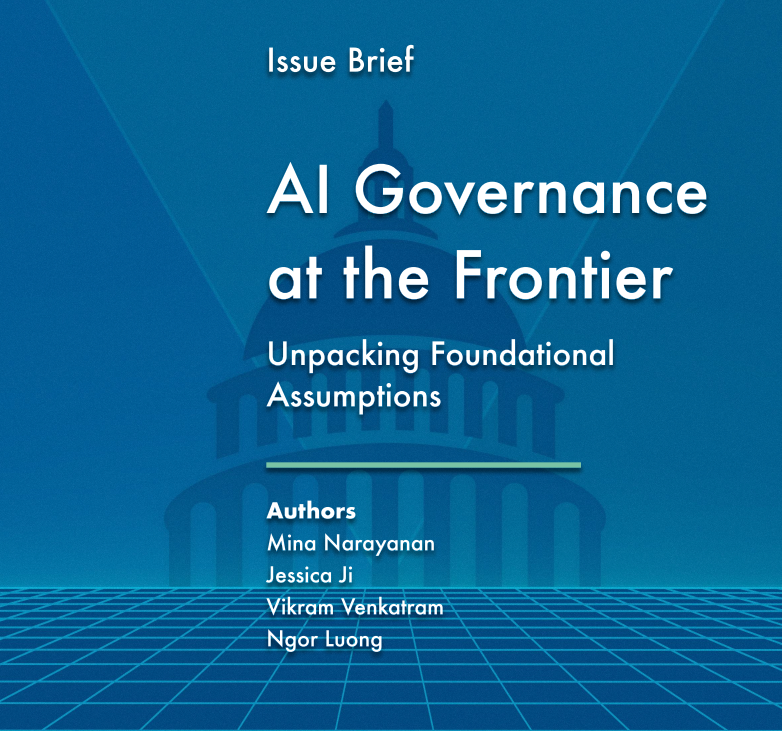
Paper of the Week: Issue Brief AI Governance at the Frontier Unpacking Foundational Assumptions (Center for Security and Emerging Technology, CSET)
Overview: "As artificial intelligence diffuses throughout society, policymakers are faced with the challenge of how best to govern the technology amid uncertainty over the future of AI development. To meet this challenge, many stakeholders have put forth various proposals aimed at shaping AI governance approaches. This report outlines an analytic approach to help policymakers make sense of such proposals and take steps to govern AI systems while preserving future decision-making flexibility.
"CSET's approach involves analyzing common assumptions across various proposals (as these assumptions are foundational elements for the success of multiple proposals), as well as unique assumptions across individual proposals, by answering three questions:
1. What risks are important to mitigate and who should have primary oversight of frontier AI?
2. Who is delegated tasks and able to play a role?
3. Would the proposed mechanisms or tools actually achieve the proposal’s objectives?
Available Sessions:
Wednesday, Jan 28, 2026 @ 10:00 AM - 11:00AM PST
Register Here
Thursday, Jan 29, 2026 @ 5:30 PM-6:30PM PST
Register Here
Hope to see you there!
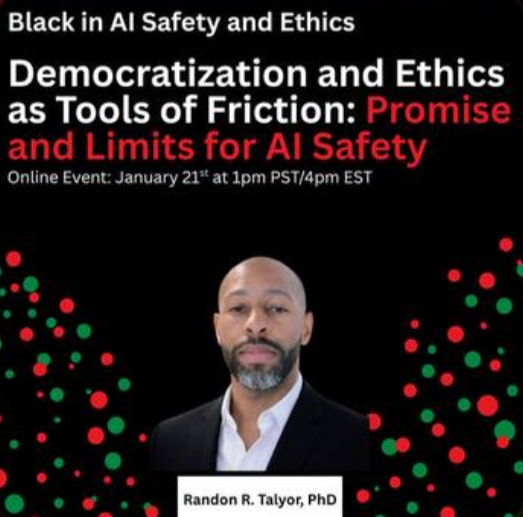
Democratization and Ethics as Tools of Friction: Promise and Limits for AI Safety (Online Event)
🔍 Join us for our first webinar in our research talk series, where experts share their insights and work with us!
This month, we are grateful to have Dr. Randon R. Taylor giving a talk on Democratization and Ethics as Tools of Friction: Promise and Limits for AI Safety.
Brief talk overview:
AI ethics and democratization are widely promoted as mechanisms for mitigating harm and aligning AI with social values. Drawing on a sociological perspective, this talk explores how these forms of sociotechnical friction operate in practice and why uneven protection across social groups can still exist. I deliberate whether unaddressed social dominance may stabilize AI deployment despite the presence of tools of friction.
💡Speaker Spotlight
Dr. Randon R. Taylor is an internationally recognized sociologist who studies the social impact of AI and emerging technologies. He was an invited panelist at the 2024 World Summit AI in Amsterdam, where he spoke on co-developing AI with the public. His current research explores community or grounded approaches to AI democratization, safety, and ethics.
This talk will be followed by a brief Q&A session with the speaker.
Sign up here: https://luma.com/a7wsz694

Learn About Base REsearch
Join us for the BASE research kick-off meeting! The BASE Research Arm is a group of experts conducting research across AI safety, security, governance, and ethics. Meet our Research Director, learn how the Research Arm will help support our fellowship’s research outputs, how the working group will conduct research across our membership’s interests, and the group’s plans for the coming months. We will go over the research streams at BASE, how our group will collaborate, and how you can get involved. A short Q&A will follow this session.
Paper Readings set to return in 2026
Sign ups for the first sessions of the new year are now open!
Paper: Towards a Sociotechnical Ecology of Artificial Intelligence: Power, Accountability, and Governance in a Global Context
This paper explores how AI governance must be reframed within a sociotechnical ecosystem, one that accounts for power asymmetries, global justice, and the accountability of both human and non-human actors. It’s a timely and powerful read for anyone interested in aligning AI systems with equitable global outcomes.
🗓️ Session Times
🔹 Wednesday, Jan 7, 2026 @ 10:00 AM PST
🔗 Register Here: https://luma.com/qx75x7dw
🔹 Thursday, Jan 8, 2026 @ 5:30 PM PST
🔗 Register Here: https://luma.com/qwy00jor
Link to the paper here
Embodied AI: Emerging Risks and Opportunities for Policy Action (Copy)
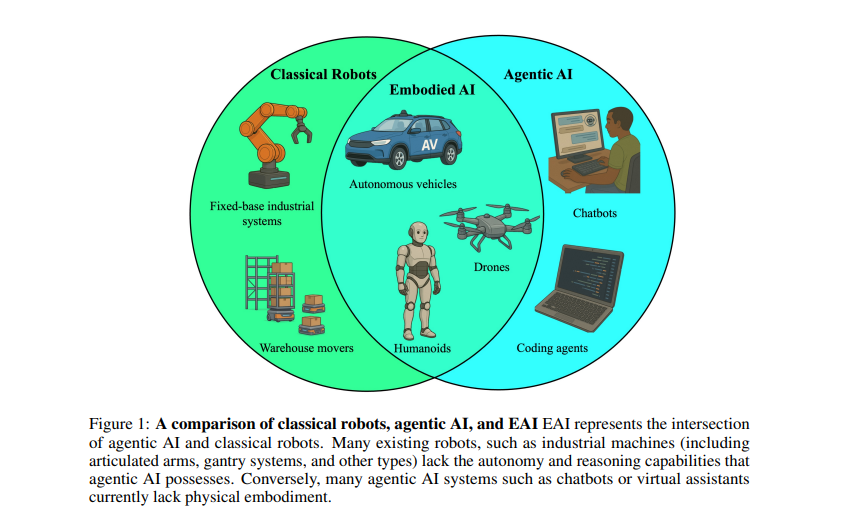
Join us Dec 11 at 10:00 p.m. PST, where we’ll be discussing “Embodied AI: Emerging Risks and Opportunities for Policy Action” by Jared Perlo, Alexander Robey, Fazl Barez, Luciano Floridi, and Jakob Mökander
This paper reviews the risks of embodied AI (EAI) providing a taxonomy of the physical, informational, economic, and social risks EAI systems pose, analyzes policies and existing frameworks to identify critical gaps, and offers policy recommendations for the safe and beneficial deployment of EAI systems.
Join the Dec 11, 5:30 p.m. PST session here:
Time zone: America/Los_Angeles
Google Meet joining info
Video call link: https://meet.google.com/whs-czpo-yhb
Or dial: (US) +1 929-229-1842 PIN: 773 344 332#
Embodied AI: Emerging Risks and Opportunities for Policy Action
Join us Dec 10 at 10:00 a.m. PST, where we’ll be discussing “Embodied AI: Emerging Risks and Opportunities for Policy Action” by Jared Perlo, Alexander Robey, Fazl Barez, Luciano Floridi, and Jakob Mökander
This paper reviews the risks of embodied AI (EAI) providing a taxonomy of the physical, informational, economic, and social risks EAI systems pose, analyzes policies and existing frameworks to identify critical gaps, and offers policy recommendations for the safe and beneficial deployment of EAI systems.
Join the Dec 10, 10:00 a.m. PST session here:
Time zone: America/Los_Angeles
Google Meet joining info
Video call link: https://meet.google.com/qug-thph-ztu
Or dial: (US) +1 413-591-2855 PIN: 411 203 611#
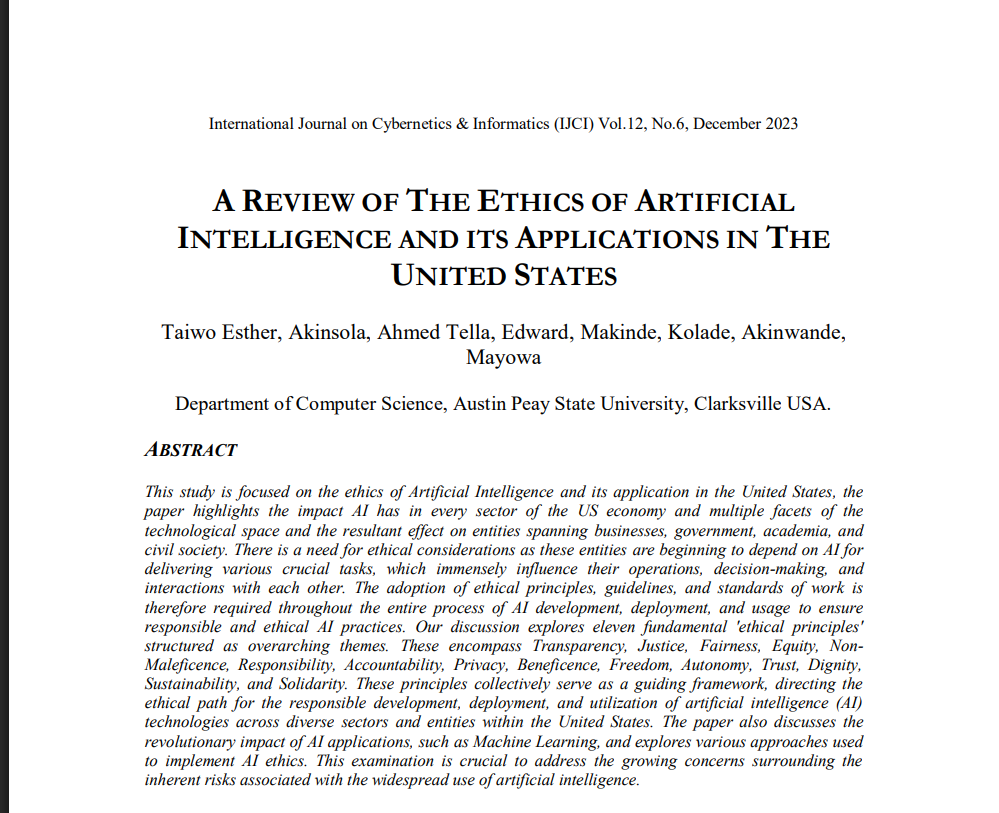
“A Review of the Ethics of Artificial Intelligence and its Applications in the United States (US Session)
Join us Dec 4 at 5:30 p.m. PST, where we’ll be discussing “A Review of the Ethics of Artificial Intelligence and its Applications in the United States” by Esther Taiwo, Ahmed Akinsola, Edward Tella, Kolade Makinde, and Mayowa Akinwande.
This paper reviews the use of AI across various sectors in the United States, highlighting key ethical issues related to transparency, fairness, accountability, and privacy.
Register for the Dec 4, 5:30 p.m. PST session here: https://luma.com/3mgzdizg
Paper Reading Session Vol 5 (AFRICA/Europe session)
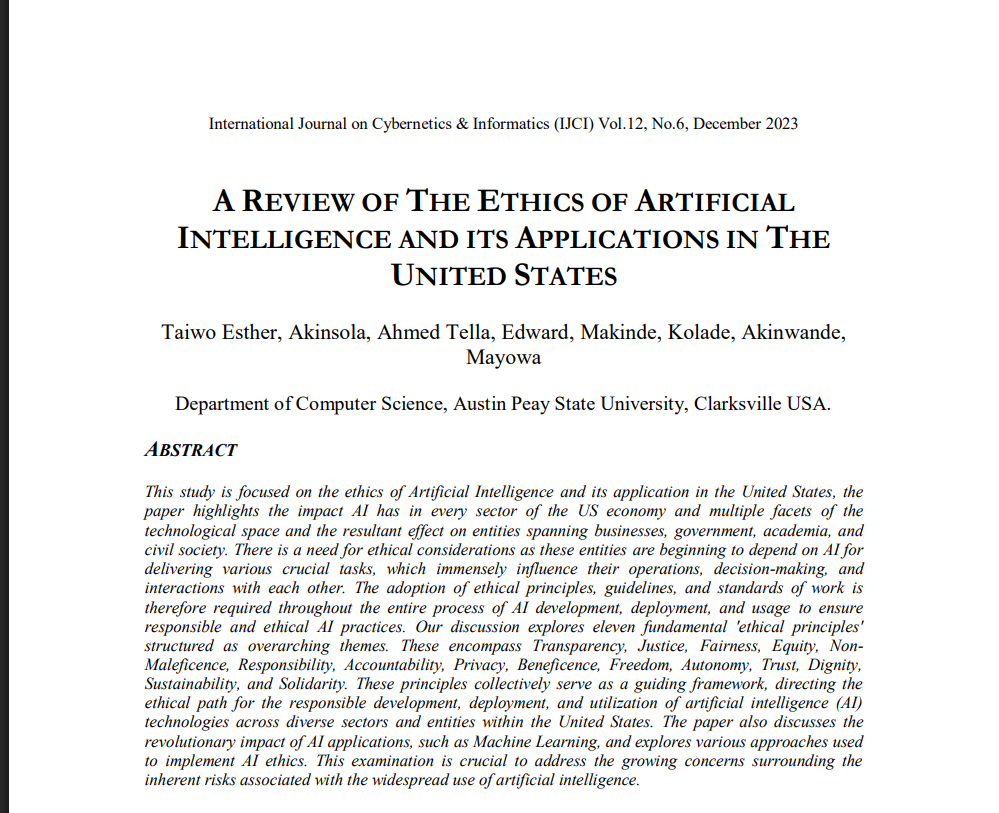
Join us for Our next paper reading sessions are on Dec 3 at 10:00 a.m. PST , where we’ll be discussing “A Review of the Ethics of Artificial Intelligence and its Applications in the United States” by Esther Taiwo, Ahmed Akinsola, Edward Tella, Kolade Makinde, and Mayowa Akinwande.
This paper reviews the use of AI across various sectors in the United States, highlighting key ethical issues related to transparency, fairness, accountability, and privacy.
Register for the Dec 3, 10:00 a.m. PST session here: https://luma.com/95ewr7hb

Black in AI Safety and Ethics (BASE) – Paper Reading Vol 4.
Join us for a discussion on practical strategies for empirical AI alignment research. We’ll explore a collection of tips and mindset shifts shared by experienced researchers to help streamline experimentation, improve research efficiency, and approach alignment work with clarity and focus. This session is ideal for participants looking to strengthen their empirical methods and gain insight into effective research habits in AI safety.
The paper reading for those in US time zones is Thursday, Nov 6, at 5:30 PM PST. The paper is Tips for Empirical Research by Ethan Perez
To register: https://luma.com/s3rk4zfy

Black in AI Safety and Ethics (BASE) – Paper Reading Vol 3.
We’re coming together for our 3rd week to read, learn, and connect through ideas that shape the future of AI. During the paper reading, we will explore a research paper on AI safety and governance, taking the time to unpack key ideas and reflect on their implications for responsible and inclusive AI development.
The paper session reading creates a space for us to learn, connect, and grow together in conversations about AI safety and ethics, while welcoming everyone who wants to learn alongside the community. You don't need to be an expert; you need to be open, curious, and ready to explore together.
Click on View Event for more info and the sign up link